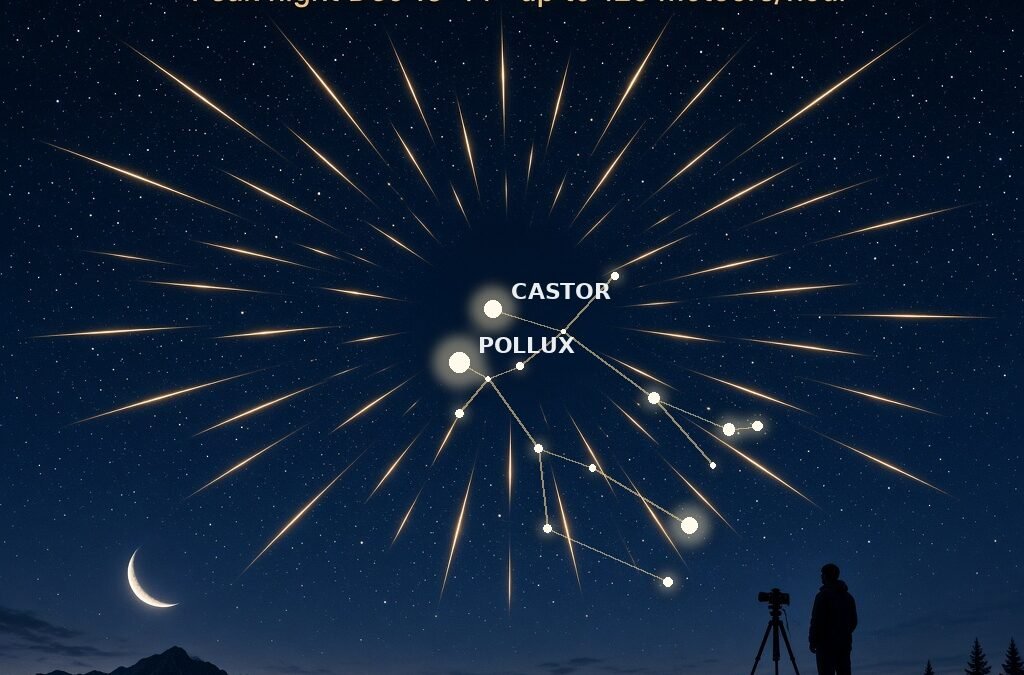
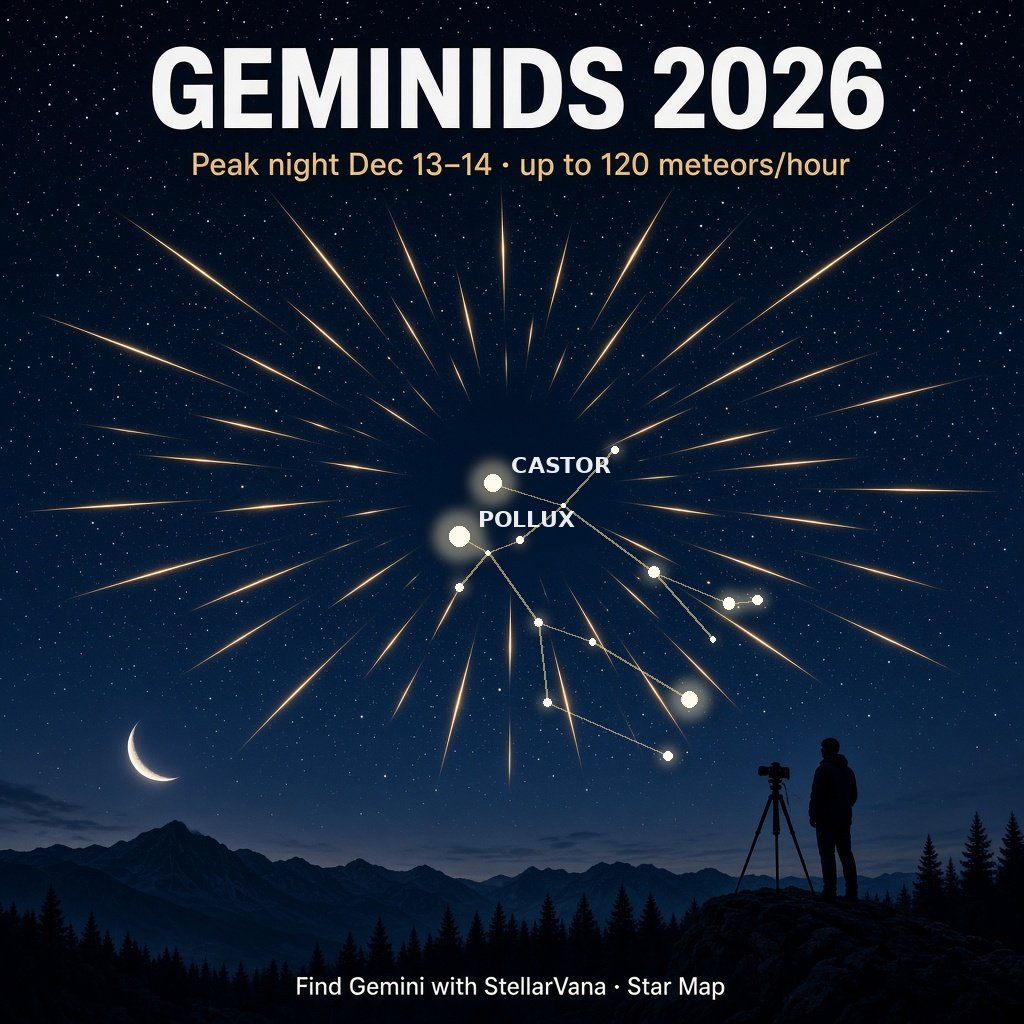
The best meteor shower of 2026 is almost here. The Geminids peak on the night of December 13–14. Under dark skies, NASA says you can expect 40 to 50 meteors an hour, and up to 120 an hour in perfect conditions. Geminids are bright, often yellow, and unlike most showers they get going in the evening, so you don't have to stay up until dawn.
Why this year is a good one
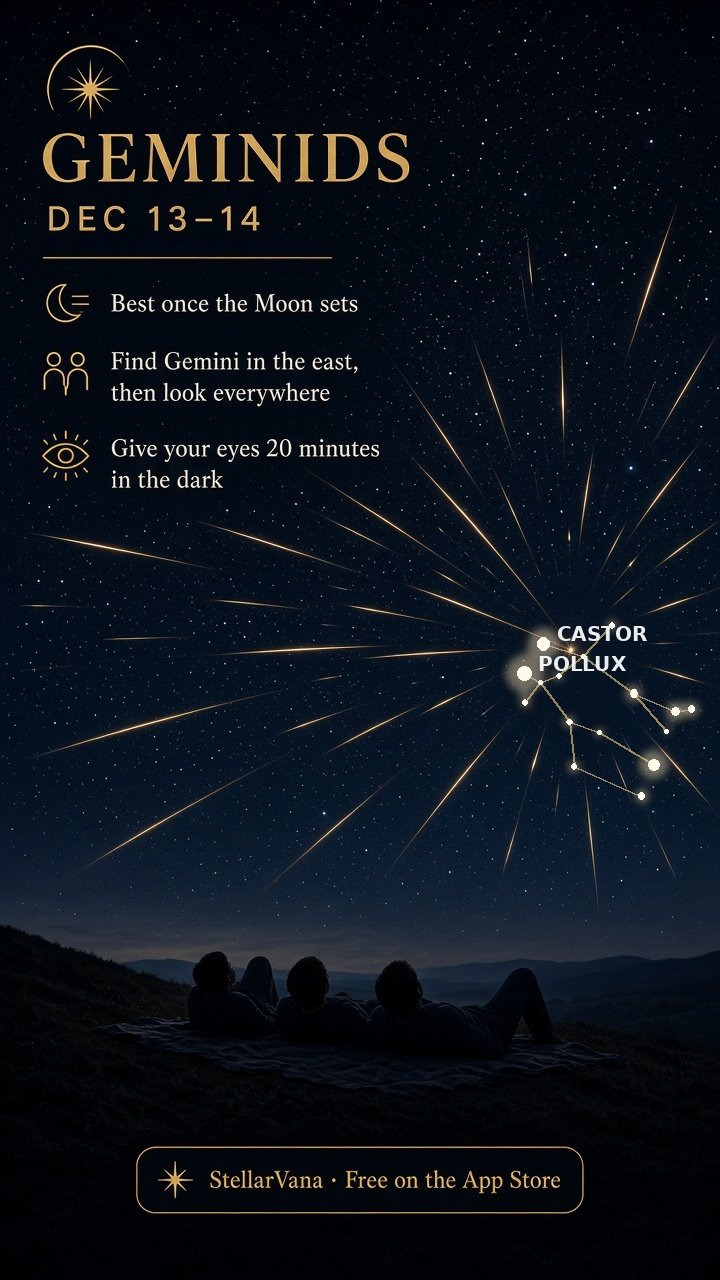
On peak night the Moon is only a thin waxing crescent, and it sets early in the evening. Once it's down you get hours of dark, moon-free sky while Gemini climbs high. The shower runs from about December 4 to 17, so the nights on either side of the peak are worth a look too.
How to watch
- Wait for the Moon to set, then head somewhere away from streetlights.
- Find Gemini in the east. The meteors seem to come from near its two brightest stars, Castor and Pollux, but they streak across the whole sky, so look all around.
- Give your eyes 20 minutes to adjust to the dark, and keep your phone screen off.
- Lie back and get comfortable. A blanket or reclining chair and warm layers make a December night much easier.
Where the Geminids come from
Most meteor showers come from comets, but the Geminids come from 3200 Phaethon, a rocky object that may be an asteroid or a "rock comet." Earth passes through its trail of debris every December, and the grains burn up at about 35 km per second.
Find Gemini in seconds
Not sure which way is east, or which stars are Castor and Pollux? Open StellarVana, point your iPhone at the sky, and it shows you exactly where Gemini is.
Sources: NASA, International Meteor Organization, Royal Observatory Greenwich.